I, Woodrow Wilson, President of the United States of America, by virtue of the authority vested in me by the said Joint Resolution, do hereby direct the government officials to display the United States flag on all government buildings and do invite the people of the United States to display the flag at their homes or other suitable places on the second Sunday in May as a public expression of our love and reverence for the mothers of our country.
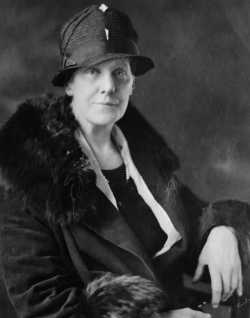
So wrote President Wilson on May 9, 1914, a hundred years ago today, marking the institution of Mother’s Day in the US (read the full proclamation here). It came about through the sweat of one Anna Jarvis, moved by her own mother’s death to campaign for wider recognition of the role of mothers in society. Later, as the holiday became increasingly commercial, she came to regret her exertions and mounted a series of spirited attacks on those who sought to exploit it for profiteering or fundraising, including Eleanor Roosevelt. She lost: according to the National Geographic, Americans will spend nearly $20 billion on mom this year. According to Hallmark, it falls behind only Christmas and Valentine’s Day in terms of greetings cards bought. But whatever the ethico-capitalist standings of Mother’s Day, its centenary seems a particularly apt moment for reflection.
This being a literary blog and your loyal blogger a lazy thinker, I decided to google “mothers in literature” for inspiration. What did I find? Horror! “The 10 best bad mums in literature”, “Bad mothers in books”, “The 10 Worst Mothers in Books”, “12 Of The Most Horrifying Mothers Of Literature”… Something of a pattern, and not a cuddly one. These lists — written mostly by women, incidentally — are generally humorously intended, or implicitly self-questioning. But it got me a-thinking. Is this harmless festive frippery or further evidence of the misogyny deeply imprinted in our sociocultural fabric?
Fairytale mums — and their sterile Disneyed descendants current today — are pretty much the catalogue of ur-mothers in our literary tradition, and they’re nearly all dead or wicked. Flip to fathers, on the other hand, and among a to-be-expected share of wicked and tyrannical types you’ll also find the sage and the just, the heroic and the complex. There are complex and brave and wise women, too, of course, but they tend to be the yet-to-settle-down crowd. But then it’s all very well moaning about sexism in the Brothers Grimm; zip forward a few paradigm shifts and where are we now?
I recently read a great Vulture article on punctuation that quoted the famously throwaway description of Humbert Humbert’s mum in Lolita: “My very photogenic mother died in a freak accident (picnic, lightning) when I was three…” This in turn reminded me of a letter in which Truman Capote wrote of his own mother:
[She] was very beautiful. She married a fairly rich man, a Cuban, and after I was 10 I lived with them (mostly in New York). Unfortunately, my mother, who had several miscarriages and as a result developed mental problems, became an alcoholic and made my life miserable. Subsequently she killed herself (sleeping pills).
The similarities are weird. Both emphasise physical beauty; condense exquisite suffering into parenthetical phrases; end in death. Much like our fairytale forebears. Elsewhere in the great American canon, there’s Holden Caulfield declaring that “mothers are all slightly insane”; Philip Roth’s Portnoy-mère; Cathy, mother and madam, in East of Eden; even Daisy Buchanan, who declares that the best thing her daughter can grow up to be is a beautiful little fool. These aren’t flimsy characters but they sure do fit a type, and it’s not a positive one. Indeed, it’s tough to think of a single great book written by a man in which a positive mother-figure lives happily ever after. There’s no doubt a Freudian reading of all this that I’m resisting making.
But is it all doom and gloom for the American mother? Fortunately not. Who can forget Margaret March in Little Women or Steinbeck’s Ma Joad? Or even the more complex figures of Sethe in Beloved or Eva in We Need To Talk About Kevin, women who survive their respective novels even if at great cost.
The real task is not one of tallying, of course. There will be plenty of counter-examples to what I’ve said thus far. But the point remains that we’re as quick — if not quicker — to start blaming mother as we are to celebrate her, and I’m not sure that’s really in the spirit of things. And I mean how many wicked stepmothers do you actually know? Why aren’t we reading about the silent majority of mothers, the wonderful, loving sort that we actually see on a daily basis and many of us are lucky enough to have? To save yourself from the scorn of Anna Jarvis’s ghost, it’s clear you can’t head to the florist or confectioner this weekend. But if you’re book-shopping ahead of Sunday, do be careful what you buy!
At House of SpeakEasy we believe that book-ownership should be a right, not a privilege. In 2017, with the help of Billy and Kathy Rayner, we launched The SpeakEasy Bookmobile. We came up with the design logo – but – historically speaking – the idea was Aristotle’s. Owning a book is a unique form of […]
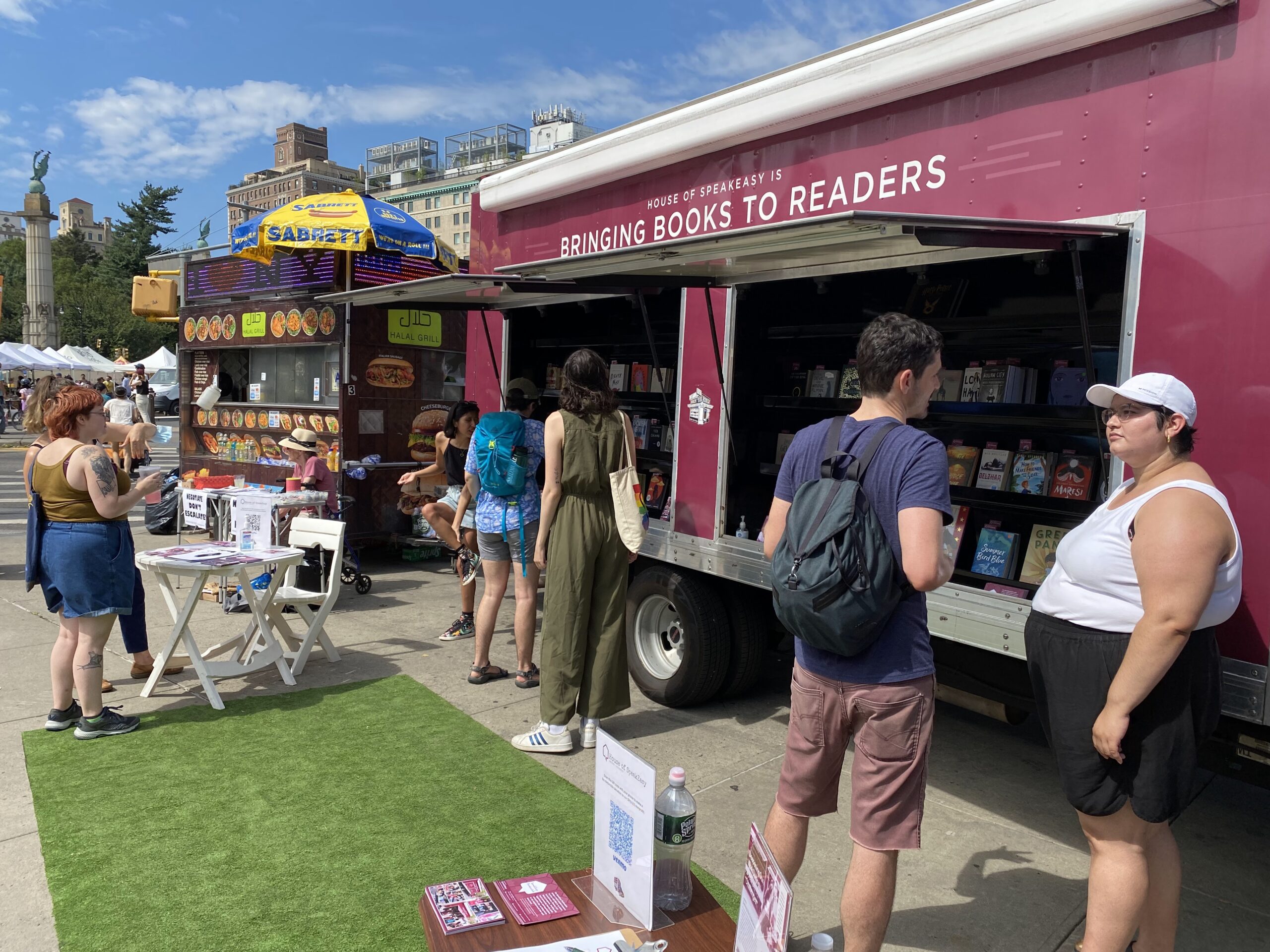
The Bookmobile at Small Press Flea, 2022 On Saturday, August 20th, the Bookmobile rolled up onto the concourse of the Grand Army branch of the Brooklyn Public Library for the annual Small Press Flea (SPF). Throughout the day, hundreds of book lovers of all stripes mingled with the regular patrons of the weekly farmer’s market […]
When the Bookmobile rolled up to Red Hook, Brooklyn for a graduation celebration in partnership with the Red Hook Initiative, it was met by six-year-old Jeremiah — who had a plan.
While the Juneteenth weekend festivities were overwhelmingly celebratory, the Center consciously structured their Fifth of July as a day of both joyful recognition and contemplation.
Larry Olmsted is an award-winning journalist who has been a visiting professor at Dartmouth College, where he taught nonfiction writing. He is the author of the New York Times bestseller Real Food / Fake Food and Getting into Guinness, a history of the Guinness Book of World Records, a book for which he broke three world records himself while researching, and the […]
Michelle Nijhuis is a project editor at The Atlantic, a contributing editor at High Country News, and an award-winning reporter whose work has been published in National Geographic and the New York Times Magazine. She is co-editor of The Science Writers’ Handbook and lives in White Salmon, Washington. Her new book Beloved Beasts: Fighting for […]
A Paul and Daisy Soros fellow, Sanjena Sathian is a 2019 graduate of the Iowa Writers’ Workshop. She has worked as a reporter in Mumbai and San Francisco, with nonfiction bylines for The New Yorker, The New York Times, Food & Wine, The Boston Globe, The San Francisco Chronicle, and more. And her award-winning short […]
Mary H. K. Choi is a writer for The New York Times, GQ, Wired, and The Atlantic. She has written comics for Marvel and DC, as well as a collection of essays called Oh, Never Mind. Her novels Emergency Contact and Permanent Record were New York Times bestsellers. She is the host of Hey, Cool […]